
Camino Portuguese 2027
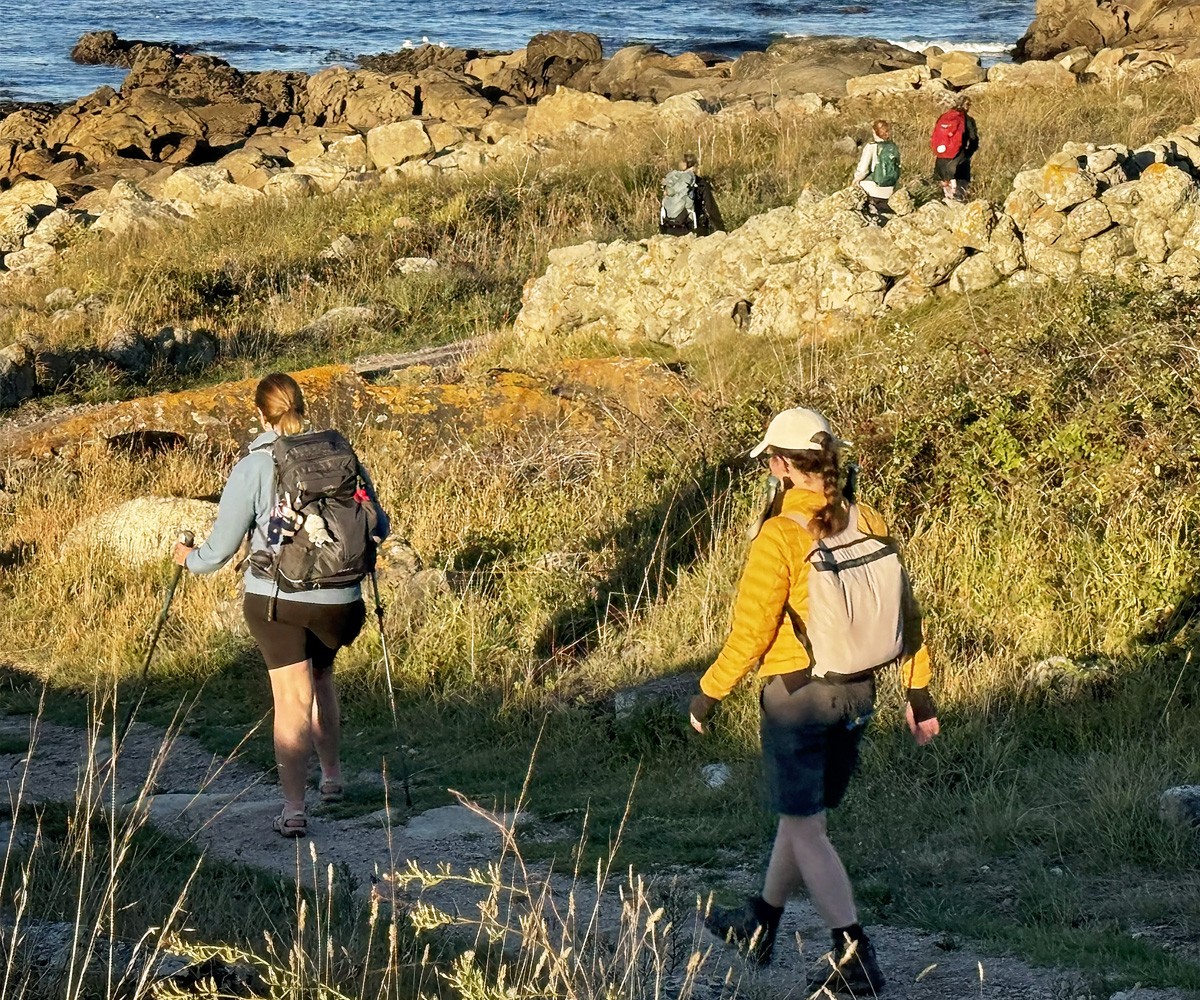
Camino Portuguese with Wildlime
27 JUNE - 13 JULY 2027
PORTUGUESE CENTRAL CAMINO + SPIRITUAL VARIANTE
FROM $5495 TWIN SHARE
How long will we walk?
Each day averages between 16-24 km and depending on the terrain will take between 5-7 hrs. We cover around 300km over 16 days and will create memories for a lifetime.
What is the fitness level required?
A good level of fitness is required, however, compared to other Caminos, the Portuguese is generally considered one of the easier Camino de Santiago routes, with minimal elevation changes. The difficulty mainly comes from walking on varied surfaces like cobblestones and roads for long stretches, which can be tough on the feet, and from the physical challenge of walking for several consecutive days.
There will be ascents and descents, but we will take these gently. Some days may be slightly harder or challenging than others. We will also set training sessions to get your legs ready, and you will be given a training guide. Kellie has extensive experience in undertaking and leading Camino walks and will advise you what each walk requires and will brief you on every day and what to expect.
Why take a walk on the wildlime side?
When you take a walk on the Wildlime side with us you will be looked after well. We know what it takes to start, what you need when things get tough and the importance of laughter to get you through the tough times.
We have coordinated numerous small group walks, specialising in Caminos. We know that many pilgrims are happy to do the hard yards but also want to know they have their own bed and hot shower at the end of a day. We make sure you sleep and eat well, and as we walk with day packs, you will have your luggage transferred daily. We are passionate about getting people into hiking- good laughs and lifelong memories await you.
Why walk a pilgrimage?
When you walk the slow pilgrim way, it is not just getting there, it’s actually getting to see and experience every single place you go through. If you are the type of person who’s just curious about the world, about how different people live, then walking is perfect! It takes you through busy streets, quiet areas, remote paths and high breathtaking peaks – it can show you things you did not know you wanted to see, and the whole scope of the world and its citizens unfolds before you. Smells, views, tastes and sounds – all your senses are heightened the more you move along the way. A pilgrim walk is an ancient walk, and you will come across such roads and paths that can feel more important than their destinations – the beauty, history and sense of calm just overwhelms.
It gives you time to think and to breathe – it’s not just for your physical health, but mental health too. Your body and mind get into a rhythm – it’s like your brain slows down to mirror the steady beat of your feet. Join a pilgrim walk and you might just be able to really get away – and bring your mind, body and soul together. With walking – it is not the distance that’s the greatest achievement, where you start or finish doesn’t matter – it’s the sense of achievement that comes from just doing it! The key is just getting started – once you move forward you won’t ever look back!
Buen Camino xx
Program
We start in the UNESCO heritage-listed city of Porto, a magnificent, vibrant city, known internationally for its famous Porto wines. We wander through small villages that seem to be lost in time as you find yourself walking across the green landscapes of Northern Portugal into Galicia, Spain. Wander through, bush, forest, valleys, and prairies. Crossing amazing Roman and medieval bridges. Meander through small villages that seem to be lost in time. An ancient path dotted with churches, monasteries, and convents. Visit historical towns such as Barcelos, Valença do Minho, Tui, Pontevedra, and Santiago.
The Portuguese Camino is not demanding with its highest ascent being Portela de Labruja (at 400m) more rolling hills than climbs. However, as with any long-distance walk, you will meet with a mixture of road, dirt tracks, concrete, and cobblestone paths.
Spiritual Variant
The Spiritual Variant: A Unique Pilgrimage Experience
The Spiritual Variant is traditionally believed to trace the path taken by the Apostle St. James (or rather, his remains) on the journey to Santiago de Compostela. Pilgrims typically enjoy a boat ride from Vilanova de Arousa to Pontecesures along the Rio Ulla, mirroring the route used to transport St. James’ remains. While this final stretch can also be walked, the boat trip is regarded as a true highlight, and, weather permitting, we will take to the water.
This route differs from the ‘usual’ Camino taken by most pilgrims, meaning that signage may not be as abundant as on the main route. Don’t worry though there are apps to help us. You can expect fewer fellow walkers and limited facilities and services. Generally, undertaking a variant like this requires a greater level of independence, flexibility, and a spirit of adventure compared to a standard route.
While some sections of this variant run along roads, there are also many opportunities for wilderness walking, offering a refreshing change from the rest of the Portuguese Camino. The initial climb out of Combarro is demanding, but we will be richly rewarded with breathtaking views and charming mountain paths.
Itinerary
Start at the very beginning – it’s a very good place to start!
Start your journey towards Camino de Santiago in Porto, one of the most ancient cities in Europe.
Home to 240,000 people, Porto charms visitors with many architectural highlights, the picturesque Ribeira river front and UNESCO heritage listed colourful historic old town.
There’s a mix of the old and the new with churches, colourful markets, wine bars, port cellars and a lively atmosphere to soak up and enjoy.
We will meet in the hotel foyer at 4.30pm and walk to the Cathedral to obtain our first stamp (carimbos in Portuguese and sello in Spanish).
We will then head to the river precinct and find a place to sit and have our first team meeting and welcome dinner.
Meals: Dinner
The day begins by taking the Metro light rail to Matosinhos to avoid the outskirts of Porto and reach the coast to start your walk on the Portuguese coastal path.
Today’s walking is flat and easy. You will be accompanied by many kilometres of golden sandy Atlantic beach, which will be your guide to the town of Vila do Conde.
The route along the coast from Matosinhos is well marked. Your walk will be close to the coast, on the pedestrian pavement, the cycle track and wooden walkways, passing fishing villages, chapels, monuments and beautiful popular sandy beaches.
Take time to visit the Museum of Naval Construction with a replica Portuguese carrack, the Nau Quinhentista, floating in the dock. Also, the Igreja Matriz church with the large aqueduct behind it and the Convent of Santa Clara.
Meals: Breakfast + Dinner
Continue on your way to the old fishing village of Esposende with the Seashore Path and Coastal Way sharing much of the route.
Follow the coast passing through the villages of Agucadoura and Areia, then cross through the Coastal Natural Park (Parque Natural do Litoral Norte).
At the church in Apulia we forge ahead through the pine and eucalypt forest before Fao – what the locals have done in this forest is a beautiful Camino experience.
Follow the coast passing through the villages of Agucadoura and Areia, then cross through the Coastal Natural Park (Parque Natural do Litoral Norte).
We cross the River Cavardo on the spectacular bridge before arriving at Esposende, a popular resort and fishing town on the estuary.
Meals: Breakfast
Today we continue on the traditional Coastal Way along quiet roads that continue slightly inland from the coast via the villages of Marinhas, Belinho, Santiago and Chafe to Viana do Castelo, which is reached after crossing the River Lima on Eiffel’s old iron bridge. We converge at the Ponte Sebastaio Bridge over the River Neiva, about half way between Esposende and Viana do Castelo, before diverging again.
Classified as a mecca of architecture, Viana do Castelo is famous for its monuments in and around the city, and the surrounding natural beauty of its beaches and seafront. Take the opportunity to visit the 15th-century cathedral and take the funicular to the Basilica de Santa Lucia on the hill above the town for some of the best views of the West Atlantic coast.
Meals: B, D
Today we continue on the traditional Coastal Way along quiet roads that continue slightly inland from the coast via the villages of Marinhas, Belinho, Santiago and Chafe to Viana do Castelo, which is reached after crossing the River Lima on Eiffel’s old iron bridge. We converge at the Ponte Sebastaio Bridge over the River Neiva, about halfway between Esposende and Viana do Castelo, before diverging again.
Classified as a mecca of architecture, Viana do Castelo is famous for its monuments in and around the city, and the surrounding natural beauty of its beaches and seafront. Take the opportunity to visit the 15th-century cathedral and take the funicular to the Basilica de Santa Lucia on the hill above the town for some of the best views of the West Atlantic coast.
Our boutique hotel is set facing the Lima River and is just 2 minutes’ walk from the city centre. It also has the Musée des arts décoratifs nearby to experience the decorative arts such as Collection of Ceramics, Paintings and furniture.
Meals: Breakfast
We are transferred to Barcelos on the longest but arguably the most beautiful stage, that we have broken up into 2 days. it includes 2 hill passes separating the river valley of Neiva and Lima and we have the natural landscape to lift our spirits, and nearly half of the route is on pathways through vineyards and woodland in the peaceful Neiva valley.
It is a nice, shorter day, which will allow time to catch up on some washing and calls back home.
Meals: Breakfast
From Portela all the way is downhill into the beautiful Lima valley, the opening of several new Albergue’s give us options to rest.
After 20km we find ourselves arriving in the oldest town in Portugal Ponte de Lima. You enter this monumental town by crossing the Lima River over an updated Roman bridge, the foundations of which date back to 1368. Then to the charming town centre with its cobbled streets and many interesting historic sites.
The local specialities are based on pork, bacalhau and “lamprea” (lamprey), a sort of slippery eel that has teeth without a jaw.
Please stock on supplies for tomorrow walk.
Meals: Breakfast + Dinner
Today is a challenging yet very beautiful stage. With most of the day traversing unpaved terrain.
We begin with an amazing path along the Labruja River until Codecal where you’ll start the climb to Alto da Portela Grande de Labruja (400 m). This is the highest point on this Camino. The terrain is very steep, with rocky ground and full of steps. Once you reach the top the view is worth every step!
Although some drinking Fontes, facilities along the way are limited so please plan accordingly.
Cruz dos Frances/Cruz dos Mortos provides a simple stone cross where you can place a stone of you own .
Descending to Rubiaes, a little village where the Romanic church of SaoPedro de Rubiaes awaits your visit. Today is the last chance to enjoy Bacalhau a Bras before crossing into Spain.
Meals: Breakfast
You will cross the remarkable Roman-medieval bridge at Rubiaes then wander into unpaved roads and hilly terrain.
Soon arriving in Valenca do Minho, the last town in Portugal, we will stop to visit the magnificent Fortaleza (fortress). A splendid medieval wall surrounding the old city.
From here we cross the international bridge that links Portugal and Spain, over the Minho River into Tui, Spain. Don’t forget to change your time to Central Europe timing 1 hour ahead. Finally reaching Tui your stop for tonight.
Meals: Breakfast
A town dating back to pre-historic times (20,000 BC). It boasts 2 Museums, one dedicated to archaeology and sacred art and the other a diocesan museum. Of course, a visit to the romànic (11-13th century) Santa Maria Cathedral with Romanesque and Gothic period vestibules is a must.
Meals: Breakfast
There are two routes to choose from, and we are opting for the alternative that goes through the natural land of Las Gandaras.
Not long after walking through Ribadelouro, you will notice a sign on your left for the alternative route, this is the more scenic route running along the Louro River, a natural and peaceful environment.
Finally, we’ll arrive in O Porino, an industrial town well known for pink granite, the best bread in Galicia, and tasty mushrooms.
Meals: Breakfast + Dinner
Today you will soon pass through Mos-Rua. Look out for Santa Eulalia church and its 82m high tower.
After Mos, you have a very steep climb to Capilla de Santiaguiño (230m ascent). Here you have the first views of the Ria de Vigo estuary on the Atlantic Ocean.
From there you will descend to Redondela where the Portuguese Coastal Camino joins the Central Camino, so you will see a lot more pilgrims.
Redondela is the start of the delicious Galician seafood. Some of the tasty offerings are Centollas (spider crabs), mussels, zamburiñas (scallops), turbot, and hake. Certainly, you can’t miss the opportunity to try some of the fresh local delights.
Meals: Breakfast
Today is a beautiful day of walking. As you go you will notice many more pilgrims who have joined from the coastal way. Several kilometres out of Redondela the path leads up to the Alto de Lomba through the forest after which there is a short section on the busy N-550 to the village of Arcade famous for the best oysters in Galicia.
We cross the long medieval bridge of Ponte Sampaio over the River Verdugo where Napoleon’s army was defeated by the Spanish in 1809 during the War of Independence.
Then walk up through the forest and enjoy one of the most beautiful stretches of the Camino following the ancient narrow stone paths as they climb up the slope.
The path widens amongst fields and vineyards, arriving at Pontevedra with its pretty historic centre, 13th-century church of Santa Maria, andthe famous Pilgrim Virgin’s church (Santuario da Peregrina), which although appears round, is actually in the shape of a scallop shell.
Meals: Breakfast
We detour to take the “Variante Espiritual” (Spiritual Variant).
The first half of this day follows a stream and then a river, with lovely country paths running alongside. The first 5km is just breathtaking, following a tree-canopied stream with moss covered stones and continuous waterfalls. It gives an otherworldly and ethereal feel and is some of the loveliest Camino walking I have experienced.
The magnificent Poio Monastery is the first jewel on today’s Camino and well worth a visit. The next is the village Combarro, with the old quarter declared “Property of Cultural Interest”. Home to three traditional elements of Galicia “Horreos” (raised granaries), “Casas Marineras” (sea houses), and “Cruces”(crosses). Combarro is considered one of the 10 most beautiful villages in Spain owing to its’ fisherman’s cottages with stone or wooden balconies unique in Galicia. You will walk a steep incline up to Mirador de Loureiro (Loureiro viewpoint). Following this about 6 km further on, you arrive at Armenteira, your resting place for today. Visit the Cistercian Monastery of Santa Maria, founded in the 12th century and known in history as an absolute haven of Peace.
Meals: Breakfast
The day out of Armenteira is truly spectacular! We will have you walking the“Ruta da Pedra e Agua” (Stone and Water Path) along the Armenteira river.
Shortly you will see plenty of old mills (some restored) in between amazing leafy vegetation and vineyards. This is the Rias Baixas wine region, where Albariño wine is made.
Eventually we reach the coastline again with Arousa Island in front of you as you walk with the beach on your left, finally crossing the iron bridge to reach Vilanova de Arousa. Mussels grown in Ria de Arousa are especially good.
Meals: Breakfast + Dinner
TRANSFER STAGE: BY BOAT TO PONTECESURES (SPIRITUAL + COASTAL)
The Variante Espiritual from Vilanova de Arousa to Pontecesures is a special boat ride, for which this Camino gets its name, commemorating the Traslatio de Santiago, or the transfer of the body of St. James from the Holy Land to Padrón, and then onward by land to Santiago de Compostela.
This maritime journey is a highlight of the route and replaces a longer walking section (please note the boat is subject to weather conditions).
Meals: Breakfast
We have a short day today, giving us time to reflect on our camino journey.
Meals: Breakfast
Our final day! From De Francos-Milladoira it is a progressive incline towards your destination. walking mainly along the freeway with quite a few asphalt paths.
A point of interest along the way is the collegiate church of Iria Flavia which was the first cathedral in Galicia, it also has a cemetery worth a wander through.
Make your way via Rua Franco to Praza do Obradoiro and the Cathedral of Santiago de Compostela.
The feeling as you walk through the old streets of Santiago de Compostela, and you catch a glimpse of the towers of the Cathedral, is indescribable.
Meals: Breakfast + Farewell Dinner
Try and go to the Pilgrim’s Mass in the cathedral at noon. Before Mass, if you wish to do so, head over to the Pilgrim’s Office to receive your Compostela and attend the 10am English pilgrim’s mass.
“Don’t cry because it is over, smile because it happened” – Dr Seuss
$5495 Inclusive of:
- 16 nights twin share accommodation
- Daily breakfasts and selected dinners, including a special welcome dinner in Porto and a farewell celebration dinner in Santiago
- Daily luggage transfers (1 x 20kg)
- Transfers between stages (as indicated)
- 1 private Camino preparation day
- Camino passport
- Camino Guidebook
- Spanish phrase book
- Taxes + gratuities
- Trekking + training notes
- Wildlime Tour leader
- Quarterly information zoom sessions to keep you on track and reaching your goals
- T-shirt and hiking buff
- Private Wildlime Camino page to share information and ideas
- Wildlime tips + talks – a manual of all you need to know about walking, packing and preparing
- Wildlime guide with you every step of the way!
Not Included:
- Flights ex Australia
- Transfers where not indicated (these are a personal choice)
- Meals + drinks where not indicated
- Travel Insurance
- Personal expenses
- Camino training weekends
Conditions:
- $950 deposit is required to secure your place
- Deposit can be transferred but is non-refundable
- Program Is subject to change
- Price is based on AUD V EUR rate 1/7/25 and may fluctuate
- To be paid in full by 1st April 2027
- A minimum 10 pax required to run this program
Date
- Jun 27 2027 - Jul 13 2027
Time
- All Day