
Kumano Kodo, Japan
Wildlime Pilgrimage
MONDAY, 10 MAY - WEDNESDAY, 19 MAY 2027
What is the Kumano Kodo?
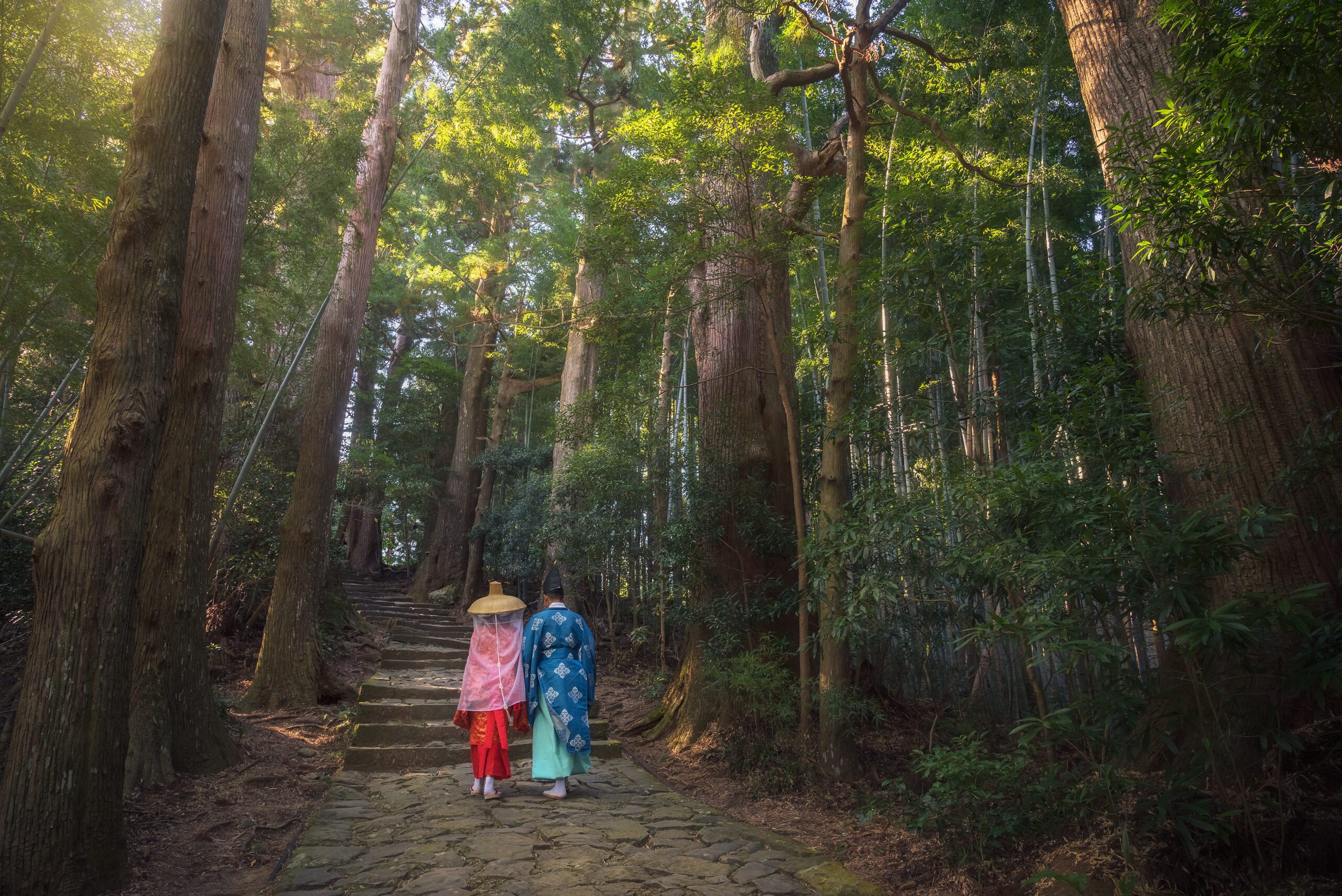
The trails of Kumano Kodo are a series of ancient pilgrimage routes, dating back over 1000 years, in Japan’s beautiful Kii Peninsula, an area also strongly associated with nature worship. At one time Japan’s Imperial family and former Emperors made the pilgrimage trips from Kyoto to the shrines of Kumano, one of Japan’s most sacred sites.
It is a journey through a thousand years of Buddhist history and offers a window into traditional Japan that contrasts strongly with its hyper modern cities. The rugged, forested mountains, quiet rural valleys, rivers and waterfalls provide a spectacular backdrop for hikers and is a great immersion into Japanese nature and culture.
Traveling in May we will see the end of the Cherry blossom season, and a perfect temperature before the heat and humidity of summer.
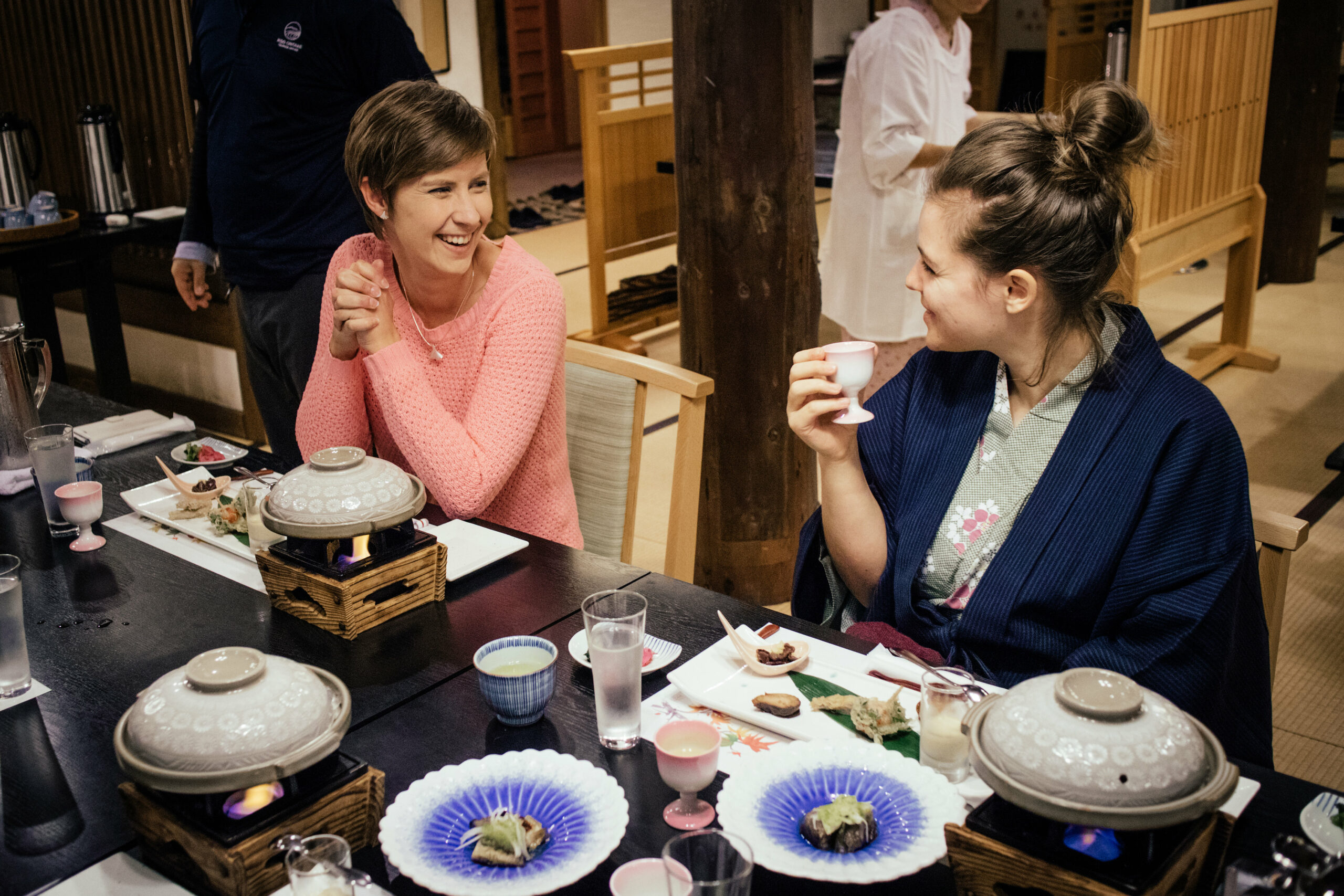
Arriving at your destination each day the traditional local guesthouses offer reviving onsens and wonderful local food.
We will stay in traditional accommodation, enjoy wonderful insights into life in rural Japan and the spiritual history of this path and region.
What makes the Kumano Kodo such a special hike and experience?
- These ancient pilgrimage trails date back over 1,000 years and where you will discover the history and influence of Buddhism and the indigenous Shinto religion.
- Beautiful nature walking through rugged, forested mountains, quiet rural valleys and alongside rivers.
- The spiritual experience within these tranquil surrounds and the Kumano Sanzan trio of shrines.
- The physical challenge and sense of achievement.
- The chance to hike one of only 2 pilgrimage walks that are UNESCO world heritage listed (If you have walked the Camino Frances you can get a dual pilgrimage).
- Delicious fresh local food and onsen culture.
- An immersive experience staying in local minshukus and ryokans with warm, local hosts.
Program
- Due to the remoteness of our locations and limited accommodation options this is a small group of only 10 places with twin share only available (no single options).
Itinerary
Depending on where and when you arrive, we will meet tonight for our group welcome dinner.
Kyoto is what many travellers envision when they think of Japan, but along with being the country’s spiritual heart and cultural soul with world heritage temples and shrines, historic gardens, generations-old shops and restaurants, and picturesque backstreets.
Having served as the capital of Japan for over a thousand years, the name “Kyoto” (written as 京都 in Japanese kanji) literally translates as “capital city.” Today, the old capital is a large, modern city with a population of over one million, yet in many ways still manages to retain the elegance and traditions of its past.
The city is home to some of Japan’s most important places of interest, including a staggering 17 UNESCO World Heritage Sites. Its myriad of highlights include the vermillion torii of Fushimi Inari Taisha, Arashiyama’s picturesque bamboo forest, the stunning Higashiyama district, and countless under-the-radar gems.
We encourage you to consider arriving a day or two earlier to explore this magical city.
Overnight: Kyoto
Meals: Dinner
This morning, we make your way by train (paid locally) to the temple mountain of Koyasan. This secluded town is surrounded by the eight peaks of Mt Koya and said to resemble a lotus flower. We take a funicular railway up the steep sides of Koyasan and then a short bus ride which will drop you near your temple lodging.
In Koyasan you will have a unique opportunity to stay in a Japanese Buddhist temple and be part of the daily rituals and spiritual life of Koyasan. You will have a comfortable room and be served vegetarian Buddhist cuisine, Shojin Ryori. ‘Shojin’ is a Buddhist term that refers to asceticism in pursuit of enlightenment, and ‘ryori’ means cooking. There are surprising tastes and not only is it delicious but good karma too!
Overnight: Koyasan
Meals: Breakfast, Lunch + Dinner
This morning you will have a unique opportunity to take part in a Buddhist morning ceremony – the rich colours, smells of incense and rhythmical chants of the monks are enchanting. Afterwards, a walk around Koyasan with its 115 temples is a must.
Be sure to visit Kongobuji, the head temple of Shingon Buddhism, the stunning vermilion Konpon Daito and Daimon, the majestic entrance gate to this mountain complex.
Perhaps the most interesting of them all is Okunoin, which has at its centre the mausoleum to Kobo Daishi, the founder of the Shingon Buddhist sect and one of Japan’s most significant religious figures. This is set in a giant cypress forest surrounded by 300,000 graves of his followers and is an awesome sight especially if you walk it at nighttime when the lonesome paths are lit by stone lanterns – very eerie! There are also beautiful day walks around Koyasan if you feel like stretching your legs.
Overnight: Koyasan
Meals: Breakfast + Dinner
After the morning ceremony and breakfast, you will have time to continue exploring the village of Koyasan or perhaps join the monks for a meditation session. You will leave Mt Koya before midday and travel by a series of short train journeys across the peninsula southwards to Kii-Tanabe. The railway line here parallels the coast and avoids the steep mountainous interior.
Kii-Tanabe is the gateway town to the Imperial Route of the Kumano Kodo and a city surrounded by the Pacific Ocean on one side and mountains on the other. The town is also home to the Tanabe Tourist Information Centre – your tour orientation will be scheduled with the staff here. This evening is free for you to explore the town – enjoy great atmosphere at the Ajikoji Restaurant and Entertainment District and perhaps stroll down to the Ogigahama Beach for sunset views.
Overnight: Kii-Tanabe
Meals: Breakfast
It is an early morning start today and after checking out and picking up your bento box, you will take a 40-minute bus ride to Takijiri (paid locally), the start of the walk. The first section of today’s walk will be a climb up from Takijiri-oji to Takahara, a rural hamlet on a ridge, noted for its ancient shrine surrounded by giant kusu-noki, or camphor trees, and a spectacular view over the surrounding Hatenashi mountain ranges.
Reminders of the past, including Buddhist statues and oji shrines, line the route along the ancient highway as you climb upwards.
Leaving Takahara behind, you head further into the mountains along the old trail, past bamboo forest and then into the pencil pine. You continue to pass reminders of the old highway, including an ichirizuka distance marker and the sites of old former tea houses, which provided rest and shelter to pilgrims up until the early 20th century.
Continuing on you crest the Hashiori-Toge pass after a short climb. The trail then descends past the Three-Fold Moon viewing area, from where it is a short climb to the small but famous Gyuba-doji statue. This ancient statue shows Kazan, one of the first abdicated emperors to pilgrimage to Kumano, sitting astride both a horse and a cow.
Your descent takes you along a cobbled path and staircase to Chikatsuyu, a small village and one of the few places where you can get limited supplies or drinks.
Your final stretch of the day takes you on a climb to Tsugizakura-oji and your accommodation for the evening. Nearby is a grove of giant cedar trees, some of which are reputed to be 800 years old!
Accommodation tonight is in a small local minshuku guesthouse.
Overnight: Chikatsuyu
Meals: Lunch, Dinner
Today’s walk will bring you along many forest paths and eventually some mountain top villages before descending to Hongu. There are few facilities on the first part of today’s route which is through the forest before eventually leading you to the shrine at Hosshinmon-oji. At this point you also have the option to take a local bus (paid locally) as the road intersects here or carry on down into the valley to Hongu.
You will continue through small settlements and get your first glimpse of the great Kumano Hongu Taisha Shrine and the giant torii gate called Oyunohara in the valley below.
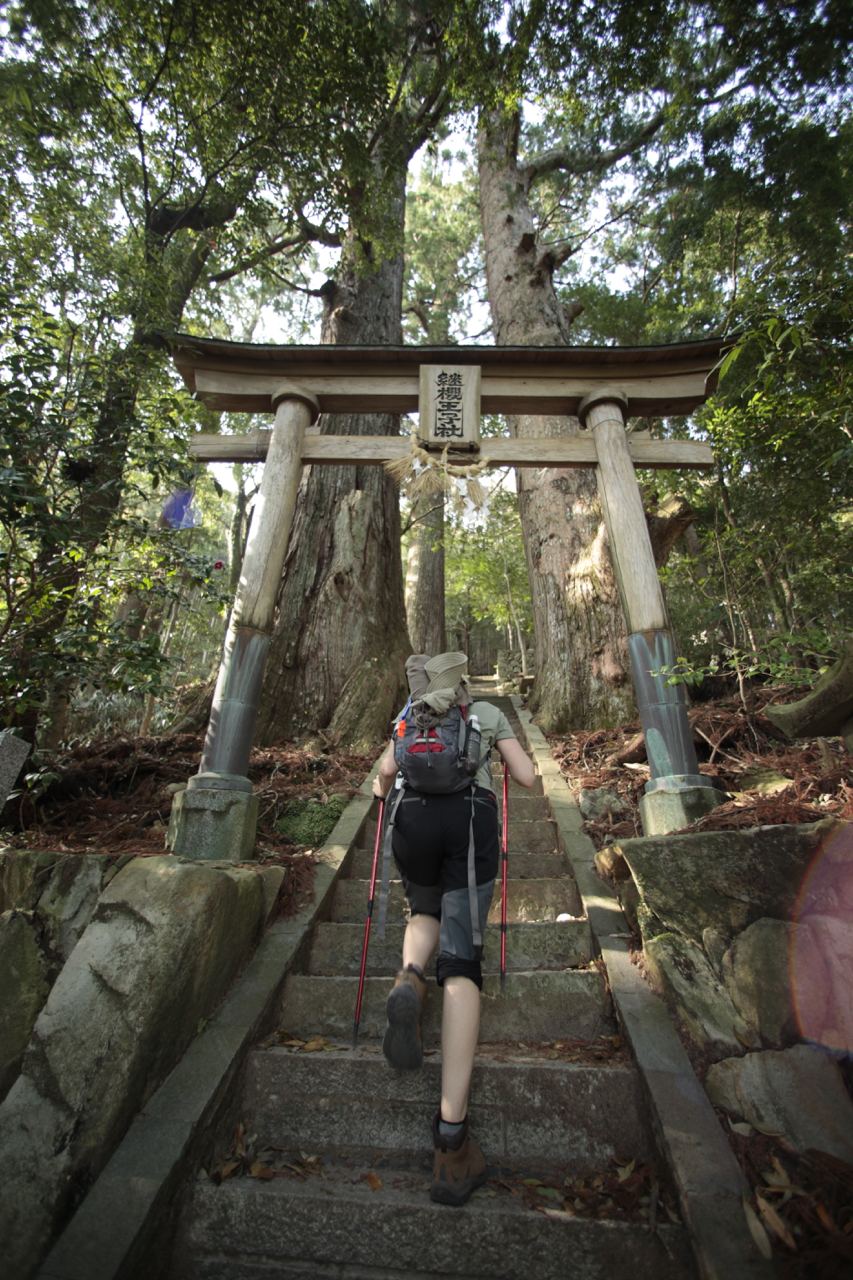
Kumano Hongu Taisha is the main shrine in the area, to which all roads in the Kumano Kodo pilgrimage lead. A long stone staircase leads to the sacred grounds of the shrine, located on a ridge and surrounded by giant cedar and cypress trees. After looking around the impressive shrine you will jump on a local bus (paid locally) to our evening destination at nearby Yunomine Onsen or Kawayu Onsen, charming little hot spring villages.
Arriving at your overnight location is a treat for tired walkers as the steam billows from the thermal rivers and there is the promise of a relaxing onsen after your exertions. The onsen thermal hot spring baths are an important part of the Kumano Kodo traditions with pilgrims performing hot water purification rituals in preparation for visiting the shrine. For us it will be more a preparation for a delicious Japanese meal in your accommodation.
Overnight: Kawayu Onsen
Meals: Breakfast, Lunch, Dinner
Today you can either completely relax and take in the local onsens or perhaps return to Hongu village for further explorations. If you wish to stretch your legs a little then walk back to Hongu on the Dainichi-goe route from Yunomine Onsen – this is a steep but delightful walk, passing some remarkable old carved statues at Hanakake Jizo, overgrown by tree roots.
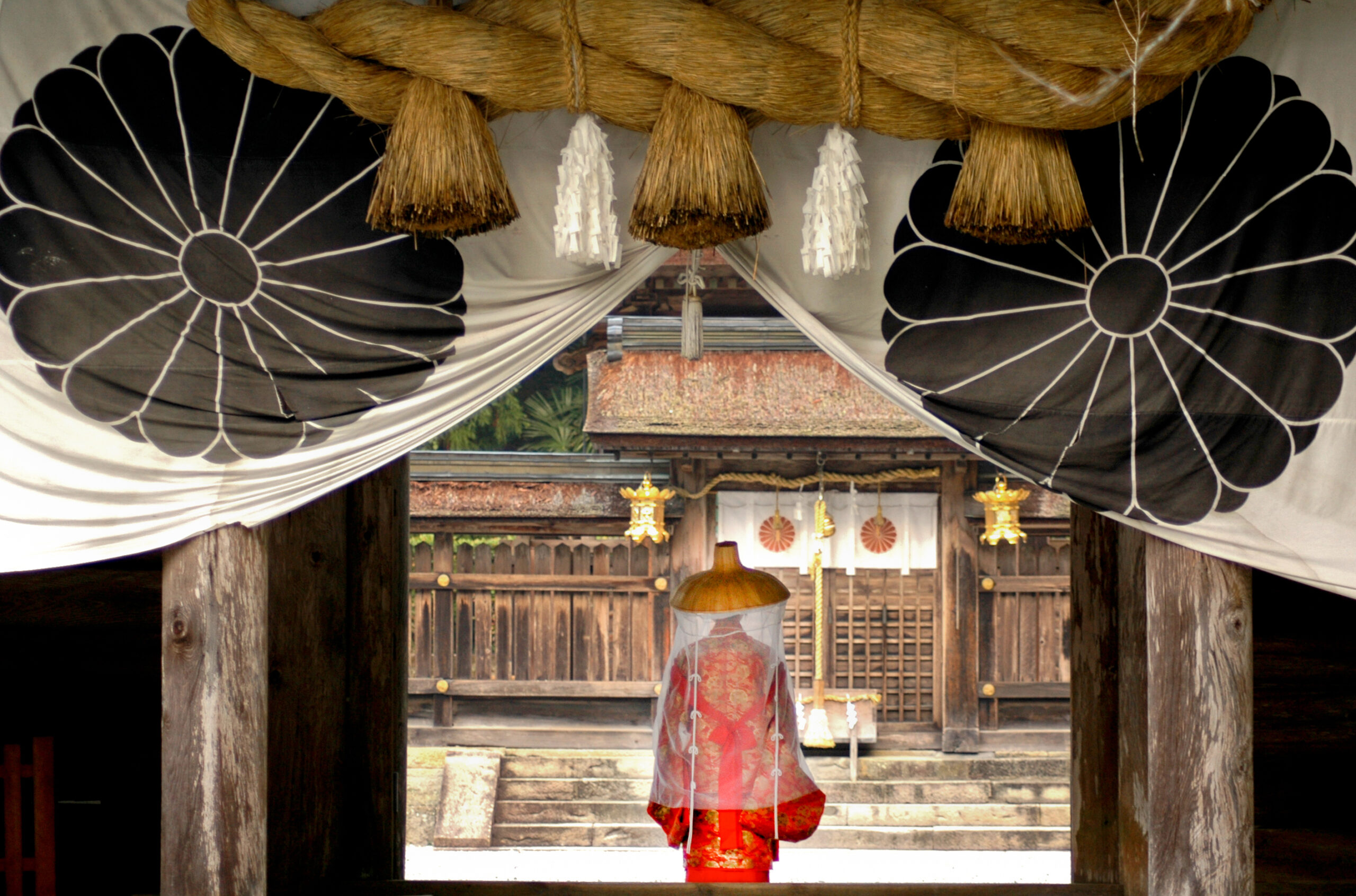
Hongu village is home to the Kumano Hongu Taisha, one of the Kumano Sanzan, three grand shrines of Kumano, and head shrine of over 3,000 Kumano shrines across Japan. Kumano was said to be the entrance gateway to the land of Yomi, the ‘other world’, which spirits travelled to in Japanese mythology. Across the Kumano Hongu Shrine is the Kumano Hongu Heritage Centre, featuring a diversity of exhibitions on the Kumano Kodo – all permanent exhibitions and videos include English translations. Just nearby the centre you will find Oyunohara, the largest torii shrine gate in the world at 34m tall, signifying the division of the secular and the spiritual worlds.
Be sure to also visit the tiny Tsuboyu onsen in a wooden cabin at the centre of town in Yunomine Onsen, which is the only UNESCO world heritage listed spa and the oldest in Japan at 1200 years old! The bath can be booked for a 30-minute private bathing and works on a first come first serve basis.
Overnight: Kawayu Onsen
Meals: Breakfast, Dinner
This morning you will take a short bus ride (paid locally) to Ukegawa to begin your walk. The Kogumotori-goe section is a fairly gentle trek with a climb and descent over a pass and is mostly in the forested mountains with some nice ridge-walking sections.
The highlight of today’s walk is the Hyakken-gura pass, where a beautifully positioned Buddhist statue on a hilltop has a backdrop of the most spectacular views of the trip. The impressive Hyakken-gura look out surprise’s walkers with a lovely panoramic view of the 3600 peaks of Kumano. Take a moment to enjoy this stunning view, as pilgrims have been doing for over 1000 years.
The trail continues to rise and fall, sometimes gradual and the off time steeper when you continue towards the Sakura-jaya teahouse remains. The views from the Sakura-jaya teahouse remains down to the valley and across the mountains are impressive. It is said that when the owners of teahouses saw pilgrims approaching from far off in the distance, they would start to cook mochi rice cakes and boil water for tea, to have things ready to serve just as the pilgrims would arrive at the teahouse. From here the trail continues on a forest track and eventually descends into Koguchi, a small and isolated village surrounded by mountains and rivers.
Overnight: Koguchi
Meals: Breakfast, Lunch, Dinner
The Ogumotori-goe is the second day of a 2-day trek from the Hongu area to Kumano Nachi Taisha. It is one of the toughest sections of the Nakahechi trail and a big day’s walk so we recommend an early start as you begin with a 2.5-hour uphill climb up the Dogiri-zaka slope. Dogiri-zaka can be directly translated as “Body Breaking Slope” and is an appropriate name for this 5km uphill section that rises 800m to the Echizen-toge Pass.
Afterwards, you pass the Jizo-jaya teahouse remains to the Moja-no-Deai, ‘Abode of the Dead’. It is believed that the souls of the dead gravitate to these higher mountains, where spirits inhabit this section of the trail. The walk continues through forest and along ridges, the path ascending and descending, until at Funami Toge pass the Pacific Ocean spreads out before you.
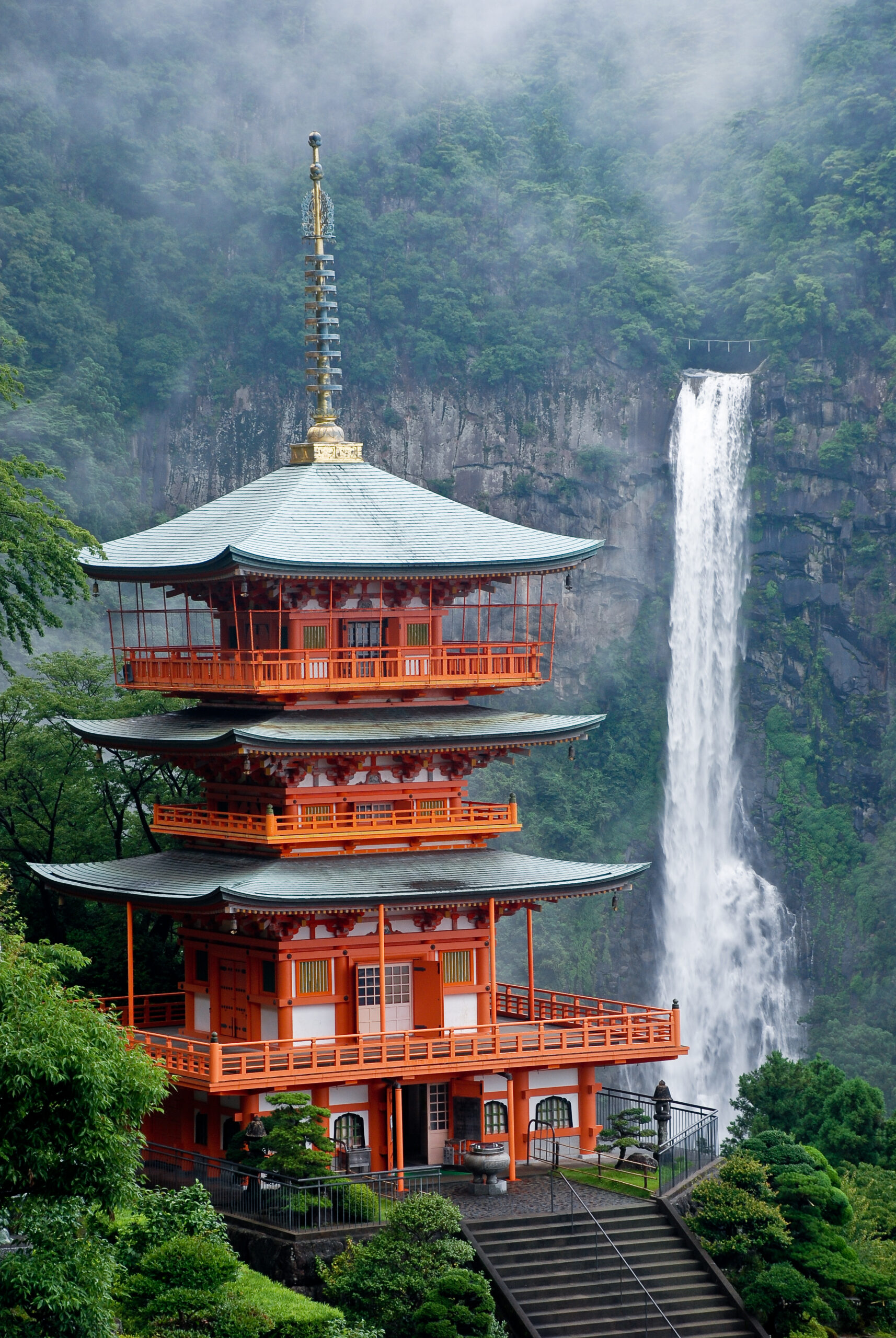
From here the trail descends to the Nachisan sanctuary and the brightly colored Kumano Nachi Taisha shrine, another of the three grand shrines of Kumano. Also nearby is the wonderful wooden Seiganto-ji temple and the spectacular Nachi-no-Otaki waterfall, which is the highest in Japan and can be seen from far out on the Pacific Ocean.
Tonight, you will either overnight in Nachisan near the Kumano Nachi shrine or Kii Katsuura, a small fishing village approximately 20-minute bus ride from Nachisan. Relax and enjoy the completion of your extraordinary Kumano Kodo Walk!
Overnight: Nachisan or Kii-Katsuura
Meals: Breakfast, Lunch, Dinner
Enjoy a leisurely breakfast and then transfer by train to your onwards destination. Train tickets are not included and can be purchased locally at the Kii-Katsuura train station. You may choose to catch a train to Tokyo or Osaka , whatever you wish to do, Wildlime can help you.
Meals: Breakfast
Cost - $4995 Inclusive of:
- 1 night in Kyoto (twin share) with welcome dinner
- 2 nights in a Buddhist monastery in Koyasan (twin share, shared bathroom)
- 1 night Accommodation in Kii-Tanabe traditional Japanese guesthouse, shared bathroom facilities
- 3 nights along the trek in traditional Japanese guesthouses, shared facilities
- 2 nights in onsen village, ryokan, Japanese room, private/shared facilities
- Daily meals as listed in the itinerary
- Orientation pack
- Luggage transfers on all trekking days
- Briefing in Kii-Tanabe at the start of our walk
- Bus ticket from Koyasan to Kii-Tanabe
- Exclusive interactive navigation app
- Pre-departure pack including guidebook + luggage tags
- Wildlime manual and private preparation day
- Wildlime Tshirt + buff
- Wildlime leader with you every step of the way!
Not included:
- Local bus tickets
- Train tickets
- Drinks other than water at meals
- Expenses of personal nature
- Flights to/from destination
Frequently Asked Questions?
How we sleep
Our Kumano Kodo treks use a variety of traditional-style accommodations. You will stay in minshukus (similar to our B&B) and ryokans (Japanese-style inns) which offer a great opportunity to meet local people and enjoy a truly authentic experience.
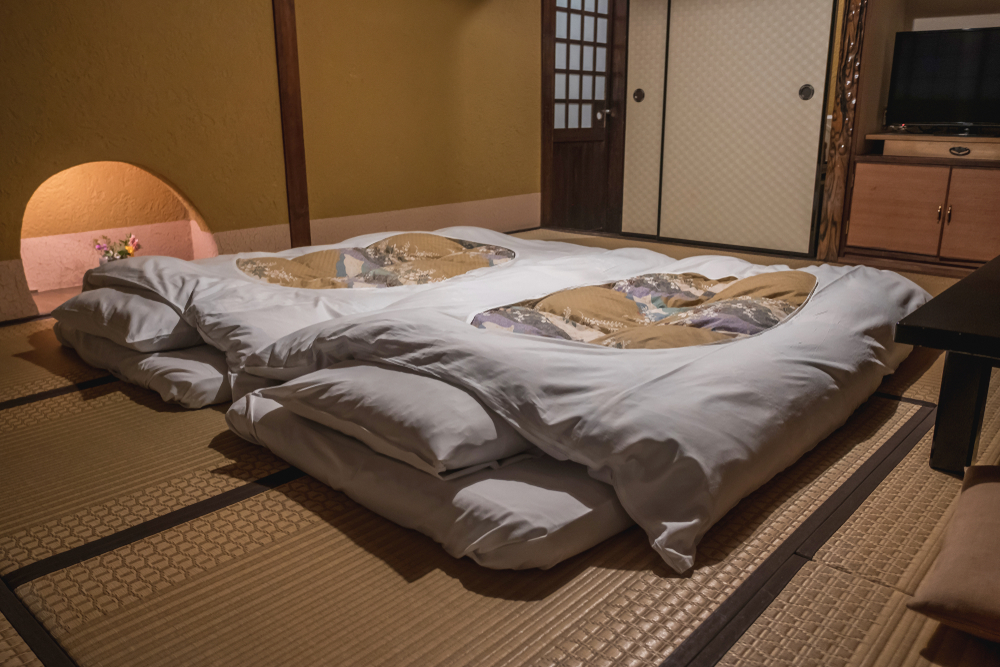
These accommodations are generally quite basic in style with most having shared toilet and bathroom facilities. Most rooms will have straw, tatami-mat flooring with futon bedding. Pillows are often quite hard, so we recommend taking your own travel pillow if you prefer something softer.
This style of accommodation offers you a uniquely, traditional experience as a guest in a family setting. You will find the standard of accommodation can vary from night to night, with some being more basic in style.
Most accommodations along the trail offer an onsen (hot spring bath), which is part of your Japanese experience. Bathing is communal though segregated by gender. Bathing in an onsen is a great way to rejuvenate tired muscles after a long day of trekking, leaving you feeling very refreshed.
Note: many of the guesthouses allow for evening bathing only. (i.e.: no option to shower in the morning).
When we go
May is a popular month to visit before the heat of summer hits. The Kii Peninsula area is fairly mild all year round and autumn colours appear slightly later than in many other parts of Japan.
Spring is a great time to hike, with warm weather and pleasant views.
This time is very popular, and the trail now has as many people trekking during this time as they do in autumn. During both spring and autumn, you can expect daytime temperatures of around 10 to 15°C.
What we eat
Most of the food served along the trek is traditional Japanese style cuisine. There are rarely options including western-style food and all guests are cooked the same meals in small guesthouses. Some accommodations can cater for some dietary requirements only, so this trek isn’t suitable for those with severe allergies or strict requirements. Having said that, the traditional Japanese food served along the trek is a real highlight.
Due to our group size and with the accommodations we would be requesting, we would need to work within the requirements that they will accept, which is essentially a pescatarian, a lactose free or an egg or nut allergy. Is pretty much all that we can accept.
As the meals are multi-platter and there’s a group of you, it does make it easier to swap some dishes amongst yourselves.
Note: For those with allergies and dietary requirements it is very important you advise any restrictions at the time of booking.
How we walk
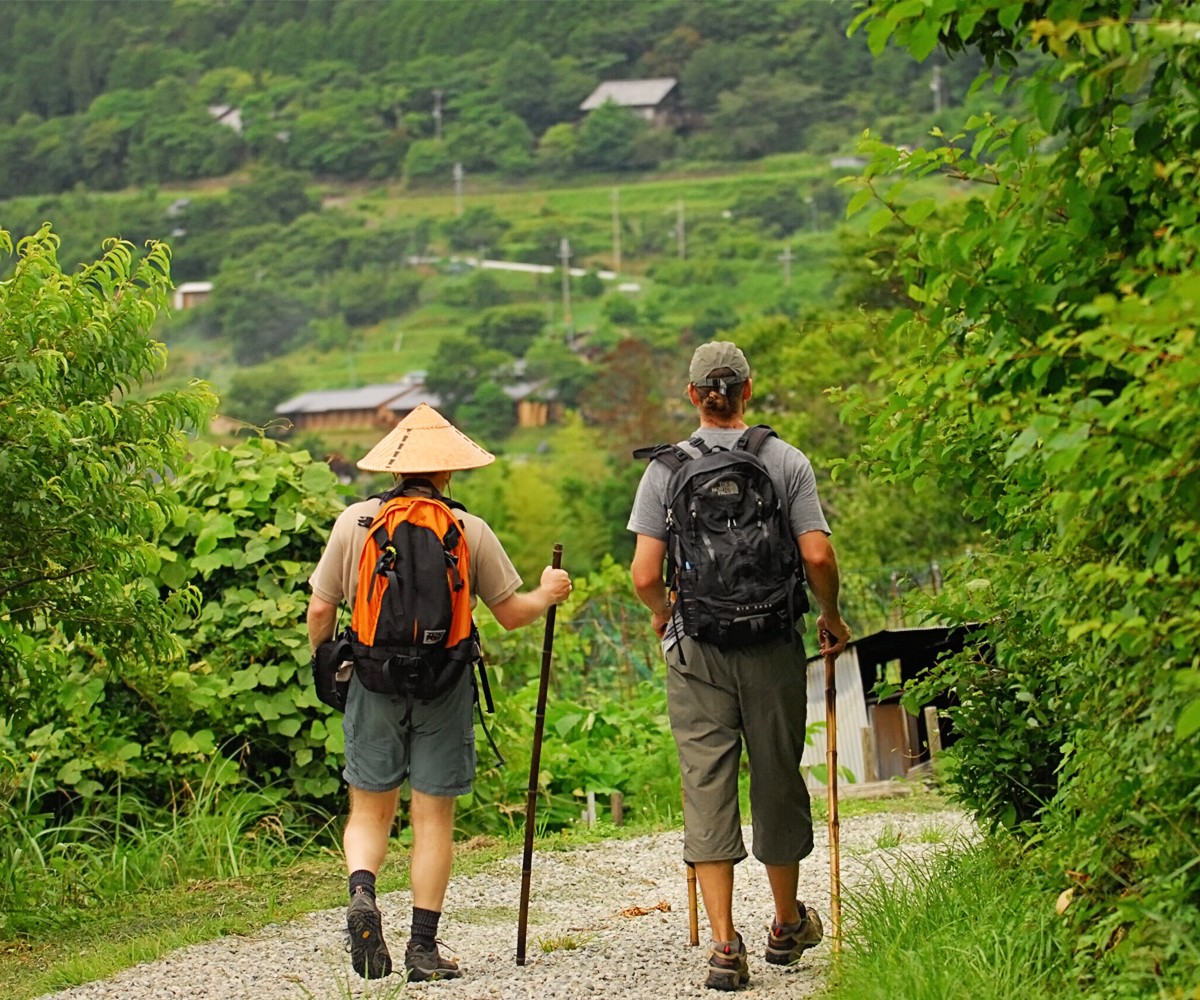
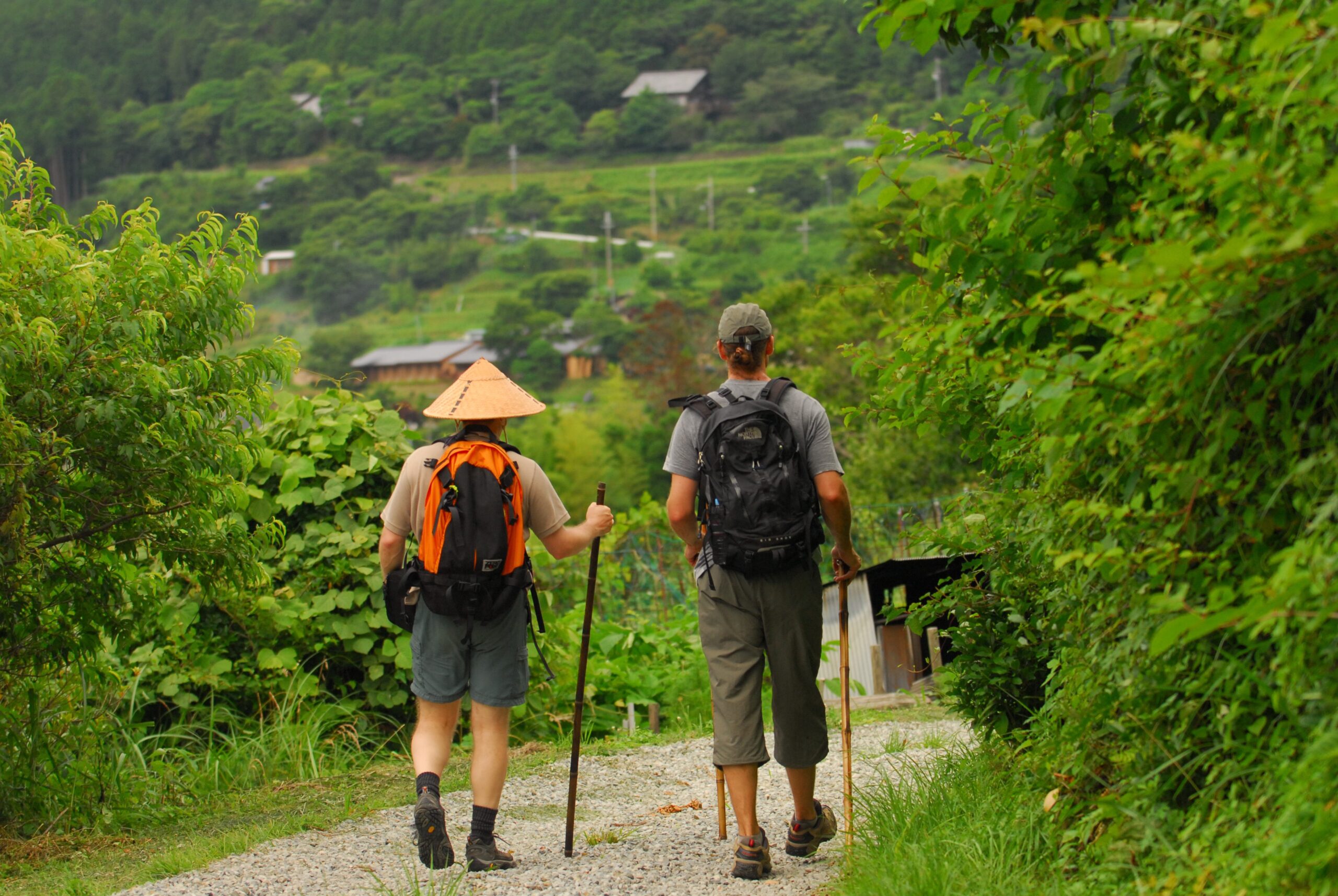
This is a self-guided trail which requires you to use your problem-solving skills, be comfortable with reading maps and have a good sense of direction. The Kumano Kodo trail lends itself well to self-guided walking with a clear path through the beautiful forest, way-markers every 500m and great directional signage in English.
The trail is extremely well marked with wooden signs. There are way markers every 500m as well as regular signs indicating directions and distances.
Each day a member of the group will lead from the front, with a Wildlime team member always coming up the back.
It is also important to consider general trail etiquette, respecting other walkers on the trail, particularly if over-taking on a narrow stretch of the path. The freedom of a self-guided trip is something that, once experienced, is sought time and again.
Why you will love this walk
History: The Kumano Kodo is one of only two UNESCO World Heritage pilgrimage routes globally. Its history stretches back over 1000 years when the emperors would undertake a strict and challenging journey to purify the mind, body and soul.
Ryokan & Minshuku: Stay in traditional, family run guesthouses with character, charm and friendly hosts.
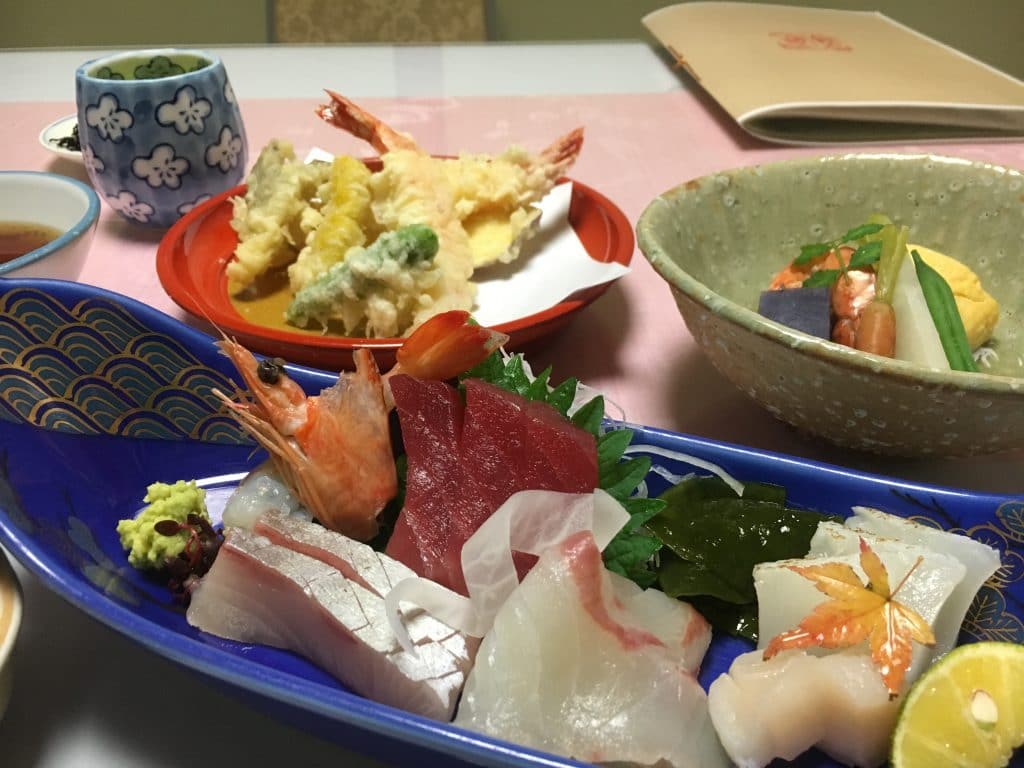
Food: A highlight of walking the Kumano Kodo! Japanese food is refined, elegant, pure and delicate: raw fish, cooked local fish, tempura, miso, rice (of course), pickled vegetables, delicious hotpots, soups and the local speciality, the alkalising umeboshi plum.
Quirky: Experience a unique, respectful, and delightfully unusual culture. Yukatas, multifunction toilets, bento boxes, green tea KitKats and more.
Onsens: A cherished Japanese ritual; after a day of trekking through bamboo groves and mossy Japanese forests, soothe your muscles (and spirit) in a hot spring.
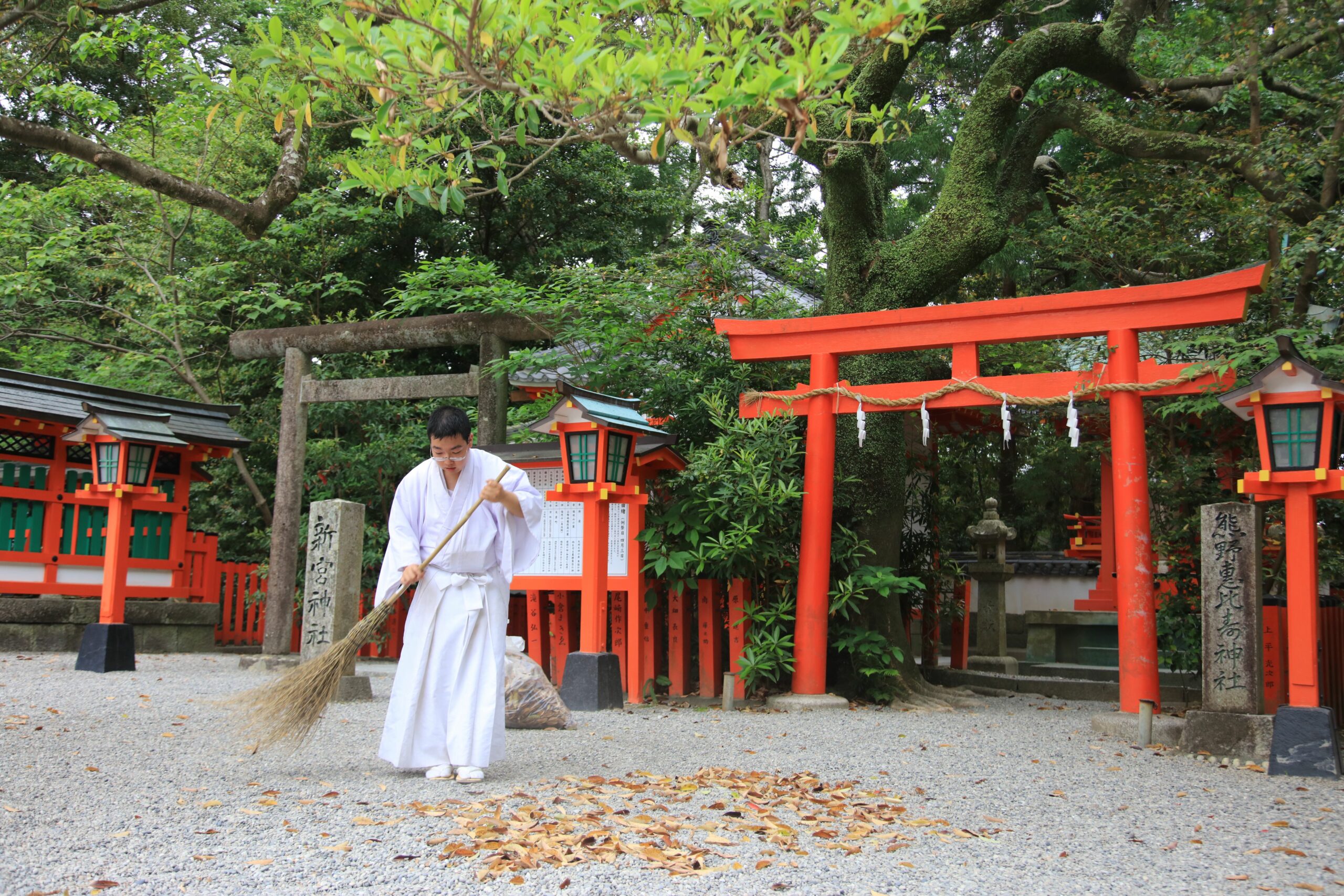
Tranquillity and serenity: Innumerable shrines can be found along this pilgrimage route and are wonderful places for rest, reflection, purification rites and prayers. The peacefulness of the trail is the main reason people love it so much. Switch off from life’s routines and switch on to the peace and tranquillity of the forest.
Nachi-no-Otaki: The tallest waterfall in Japan (133m): a fitting climax to a journey first undertaken by emperors and aristocrats seeking spiritual purification.
Physical challenge: Completing the Kumano Kodo pilgrimage trail is an immensely rewarding achievement.
Is this walk right for me?
When considering booking a walk it is important that you look at the descriptions about accommodation, food and level of physical difficulty to ensure that the trip matches your expectations. Particularly with the physical difficulty rating, it’s vital to select a trip that is realistic for your ability.
Physical grading
This is a demanding trek offering a rewarding physical challenge. It is determined as challenging to strenuous. We have used several criteria to assess the difficulty of our walks, including the number of hours walking required each day, terrain and conditions underfoot, weather, gradient, altitude, signage and facilities along the trail.
To prepare for walks of this grading, we recommend completing 2 to 3 walks per week, increasing distances while carrying a 6-8kg pack, with some hill walking or heavy sand walking included. Please note these gradings are a guide and will depend on your individual experience, fitness level and mental attitude. On most days on the Kumano Kodo, you will walk between 13km and 24km (6 to 9 hours), with ascents and descents.
The walk will be more enjoyable if you have a good level of fitness and are participating in regular exercise in the lead up to your trip. You will need to practice hiking in a hill or mountain environment with your equipment (boots especially!) that you’ll be taking to the Kumano Kodo. Regular stair climbing will also help you prepare for this walk.
Although the trail is well defined and well signed, the majority of the trail is on rugged mountain terrain with exposed tree roots, steep up and down sections, loose rocks and stone steps, which can be slippery underfoot. The more training you do and the better prepared you are, the more you will enjoy this beautiful World Heritage listed walk.
Regular Training
While we often see amazing improvements in people’s fitness with a program of regular training before a hike, you must be realistic about whether you can commit to this with your current lifestyle. If you feel you are unable to commit to the training needed to achieve the level of fitness required, then you should consider another walk that is less demanding.
Wildlime has walks that are introductory, intermediate and advanced so we can start you off gently or challenge you – whatever level you are at.
The only way to accurately judge whether you can cope with the demands of any given walk is to have a chat with us.
What is it like underfoot?
The Kumano Kodo is a mountain trek with waterfalls and shrines. Set mostly in the deep forest, there are a number of steep ascents and descents along the trail. Distances can be deceptive on the Kumano Kodo.
Although the route does not go to great heights like some mountain walks, it is easy to underestimate the difficulty and effort required due to the regular ups and downs.
The Kii-Peninsula is an exceptionally mountainous region. Paths vary from beautiful stone flagged sections to gnarly tree-root covered sections of bare earth and loose rocks. It can easily take 7 or 8 hours to walk as little as 14km a day (with breaks), especially if it has been raining and the path is slippery.
Why walk a pilgrimage?
When you walk the slow pilgrim way, it is not just getting there, it’s actually getting to see and experience every single place you go through. If you are the type of person who’s just curious about the world, about how different people live, then walking is perfect!
It takes you through busy streets, quiet areas, remote paths and high breathtaking peaks – it can show you things you did not know you wanted to see, and the whole scope of the world and its citizens unfolds before you. Smells, views, tastes and sounds – all your senses are heightened the more you move.
A pilgrim walk is an ancient walk, and you will come across such roads and paths that can feel more important than their destinations – the beauty, history and sense of calm just overwhelms.
It gives you time to think and to breathe – it’s not just for your physical health, but mental too.
Your body and mind get into a rhythm – it’s like your brain slows down to mirror the steady beat of your feet. Join a pilgrim walk and you might just be able get away – and get your mind, body and soul together.
With walking – it is not the distance that’s the achievement, where you start or finish doesn’t matter – the sense of achievement that comes from just doing it!
The key is just starting – once you move forward you won’t ever look back! so what is stopping you from taking a walk on the wildlime side with us?
Dual Pilgrimages
You say Camino – I say Kumano!!
If you have done the Way of St. James, you will notice a few distinct differences in this pilgrim walk.
Firstly, The Kumano has noticeably fewer pilgrims than the Camino because it is a more rural and remote trail, but the tranquillity and peacefulness of the trail is the main reason people love it so much.
The full Camino route is 790km. The Nakahechi Route on the Kumano Kodo is much shorter (68km) but still offers splendid walking through a mountainous and sparsely populated part of the Japanese mainland. It can take up to 40 days to walk the full Camino, while the Kumano can be completed in a 7-day itinerary.
On both trails it’s nearly impossible to get lost. The Camino is a well-worn path and very well marked with boundary stones, scallop shells and yellow arrows. Much of the Kumano is also extremely well marked with wooden “Kumano Kodo” signs. There are even “Not Kumano Kodo” signs on some crossroads and waymarkers every 500m!
Want to know more?
Dual pilgrim program
If you walk both the Camino de Santiago and the Kumano Kodo pilgrimages your walking efforts will be honoured by the ‘Dual Pilgrim” program, which celebrates, honours and shares the stories of those who have completed both routes. You can get a dual Kumano Kodo–Camino de Santiago pilgrim passport to get stamped along both trails and on completion you receive a certificate of gratitude and congratulations. This is a great memento to remember pilgrims’ incredible journeys.
Kumano Kodo and The Way of St. James are the only two World Heritage UNESCO-listed pilgrimage routes. As sister pilgrimages, Wakayama Prefecture (Japan) and Galicia Province (Spain) have officially twinned to develop friendly relations between regions and countries and contribute to world peace and development.
Though Kumano Kodo is located in the East, while the Way of St. James that leads to Galicia’s Santiago de Compostela Cathedral – (one of the three holiest sites of Catholicism) is located in the West, both ancient roads testify to a parallel history of faith, originating in the early 10th century.
If you have already walked the Way of St. James you can get dual pilgrim certificate
https://www.spiritual-pilgrimages.com/
For registered Dual Pilgrims the Kumano Hongu Taisha (shrine) has a short “Dual Pilgrim Taiko Ceremony”. This can be arranged at the Kumano Hongu Taisha shrine office.. The final stamp for the Kumano Kodo is available in the South Hall at the Kumano Hongu Heritage Centre. Here, you will also get your certificate.
Gallery
Date
- May 10 - 19 2027
Time
- All Day